Saturday, 29 January 2022

Nagaswamy - beyond borders


Dr Nagaswamy’s contributions on the Global Stage

In December 2014, Tamil Heritage Trust organized a Pechu Kacheri at Tatvaaloka audiotrium, Eldams Road, Teynampet, to honour Dr Nagaswamy, noted archaeologist, historian, and polymath, former Director of the Tamilnadu State Archaeology department. Dr Marxia Gandhi helped put together a panel of people he trained in epigraphy at the TN Archaeology department. They presented his discoveries in various fields like Archaeology, Epigraphy, Coins, Bronzes, Literature etc. On the final day Nagaswamy himself delivered an illustrated lecture on a topic of his choice. He chose the Chola paintings in Rajaraja Choleesvaram, the Big temple in Tanjavur.

On the first day, Prof Swaminathan, founder THT, presented his own take on Dr Nagaswamy's Tamil book "Oviyap Paavai" on the various arts - stone sculptures, paintings, bronzes, wooden images etc - found across the length and breadth of Tamilnadu. The script was based on the excerpt from the book, selected by Swaminathan, and voiced by Nagaswamy.

Prof Swaminathan was kind enough to honour me with the task of presenting a selection of Dr Nagaswamy's papers at international seminars and journals. My lecture, titled "Atyanta - beyond borders" followed that of Swaminathan. 

I met Nagaswamy at his residence around October 2014.  He gave me a few journals and books and pointed out selected articles which were presented or published at international fora. Of these I chose a subset and created a Powerpoint, and brief summary document.

In this series, I will present my brief summary of these papers of Nagaswamy.

------------------------------

Introduction

Dr Nagaswamy’s contributions on the world stage exhibit breadth, depth and sagacity. He has interacted with scholars on Indian art and history from across the world, spoken at museums and universities, submitted path breaking papers and enlightened scholar and layman alike on subjects as diverse as South Indian Bronzes, Art of the Pandyas, identifying the Tanthrapitha Purnagiri, connecting Chidambaram and Bengal, Temples of Village Gods, Jain art under the Pallavas and Dolmens and Hero Stones.

His services as an expert witness in the Pattur Nataraja case, were singled out for praised by the Justices of the London High Court.

Such international scholars as AL Basham, Douglas Barrett, Willem Willets, Mulk Raj Anand have remarked on his scholarship. He has debated scholars like Michael Lockwood on Mahabalipuram and the Rockfort Mahendra Pallava inscription; Michael Witzel on Harappa/Vedas. As a publisher, he has brought out books explaining the spread of Sanskrit and Indian culture in Central, South East and East Asia. His contributions of the links between South India and South East Asia are seminal.

Aesthetic and Idiom

The aesthetic of Indian Art in sculpture, bronze and painting is enhanced by idioms in Indian Languages, especially the vast literature in Sanskrit and Tamil. Art reflects Literature – the Vedas, Puranas, Itihasas, Tevaram, Divya Prabhandham, Tiruvilaiyaadal, Tiruttonda Puranam, have inspired most depictions in temples. An understanding of such Literature enhances a person’s aesthetic sense and enables him to enjoy these works of Art.

By bringing to bear his vast knowledge of literature mentioned above, and others too, on his reading of history from epigraphy, Dr Nagaswamy has enriched the public understanding of such art, and countered the misconceptions of scholars who are unaware of some of these literary works.

His rhetorical skill in drafting the written word and delivering these concepts in resonant oratory are unrivaled.

We present here a selection of papers and lectures he has delivered in international fora and published in foreign journals.

  1. Ardhanaari, Harihara and Nataraja
  2. Chidambaram and Bengal
  3. Purnagiri - the Tantrapitha
  4. Jain art under the Pallavas
  5. The Indian pictures of Governor Peter Anker
  6. Temples of village Gods
  7. Dolmens : Hero stones
  8. Pallava influence on Chalukya art
  9. Temporal seat of authority in Rural and Urban settlements
  10. Art of the Pandyas

Related Links

Nagaswamy - A tribute (in Madras Musings)

Tolkappiyam and Bharata's Natya Shaastra

மயிலாப்பூரில் பல்லவர் இசை

My blogs on history

My blogs on art


Saturday, 15 January 2022

James Watt’s Russian encounter

A few months back, I gave a lecture at Varahamihira Science Forum, which explained how James Watt invented the steam engine. I prepared this lecture, for a course I teach on Inventions and Discoveries, at Saveetha College.

Andrew Carnegie’s biography of James Watt was a major source for learning about James Watt, his childhood and education, his technical training, experiments, struggles, failures, friends, marriages, religious and social beliefs, the economic and legal environment of England, partnerships (most importantly with Matthew Boulton), his success, his continued research and development, other inventions, employees, customers, his scientific discovery, his obstinacy and resistance to improving the steam engine.


An absolutely fascinating story. I am surprised that I had never even heard of the book, before I stumbled upon it. It was out of print then, but available online in Kindle. Many aspects of his life, and the engine he invented, were quite surprising. My lecture seemed to have no effect at all on the few listeners, so perhaps my surprise is unwarranted.

At one stage in his life, he struggled for lack of money. His partner John Roebuck’s business failed, so Watt had no money to continue experiments to make the steam engine work well. Fortunately, he met Mathew Boulton, an entreprising businessman, very creative in organization and sales. Boulton and Watt formed an enduring friendship and business partnership that have rarely been surpassed in history.

Roebuck and Watt had signed an agreement. As per this agreement, Roebuck invested a thousand pounds ( a huge amount in the 1760s) funding Watt’s investigations into the steam engine. He was confident Watt would develop a better engine than the Newcomen engine that was in use among miners. When Watt succeeded, the idea was that Watt would get one-third share of the profits and Roebuck two-thirds as investor. But Roebuck’s main business failed, he was in debt, and Watt’s research money dried up. Boulton stepped in, paid off Roebuck’s debts, plus the thousand pounds for his the steam engine investment and thus replaced Roebuck as Watt’s business partner.

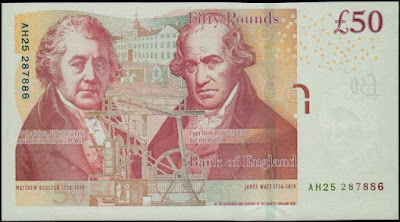
Recently, the British government, which only printed the faces of the ruling king or queen on its currency, the pound, until recently, issued a fifty pound currency note, featuring Watt and Boulton together.


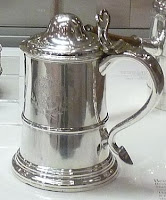
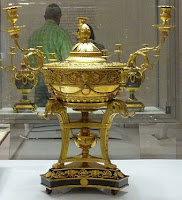
Boulton owned a “manufactory” (what we call a factory today). His employees, artisans, manufactured “toys” – but the word meant something very different in the 18th century. Toys included buttons, buckles, cups, jars, candlesticks, copper and silver plates – what we find in every fancy goods store in any street in India. Britain was getting wealthier and developing a middle class, and they bought such new fancy things to decorate their houses.

But Boulton did not sell only to the new middle class. His famous customers were wealthy and some were aristocrats. His prestige really rocketed when princes of the English royal family became his customers. Princes Edward and George (who later became king) bought swords from Boulton’s manufactory. After that other royalty also became his customers. His best customer was Catherine the Great, of Russia. Yes, that very same Catherine who later became Empress or Czarina. The empress not only visited Boulton’s manufactory, she also stayed as his house guest. And that is when Boulton must have told her about his brilliant inventor friend who was experimenting with a steam engine.

Tankard, Boulton factory 
Picture: Wikipedia


Tea urn, Boulton factory 
Picture: Wikipedia


Catherine was so impressed with Watt, she offered him five thousand pounds to come and settle in Russia, and continue his research there. James Watt must have been sorely tempted. Boulton was aghast! He pleaded with Watt not to accept the Queen’s offer, and thanks to his friendship, Watt agreed to stay back. Watt’s first wife had died a few years earlier, and his attempts to marry another lady (somewhat wealthy) were stymied by her brother, until the more respectable Boulton wrote a recommendation letter to the lady’s father. One suspects that this played a big role in persuading Watt to stay.

One might wonder if England’s most famous inventor would actually have left England for Tsarist Russia. It would seem odd today, when England freely allows all the business magnates of the world to buy homes in their country. But much before Watt, Swiss mathematician Leonard Euler had gone to stay and research in St Petersburg, Russia. In fact, he was following in the footsteps of the Bernoulli brothers. Euler stayed for a few years in Russia before accepting Frederick of Prussia’s invitation to move to Germany, but Catherine the Great invited him back to Russia and back he went. So, no surprise that Catherine invited James Watt, also.

The discoveries of Euler in mathematics were not particularly useful to Russia. It simply gave Russia an intellectual prestige, that it could attract exceptional talent, on par with the more scientifically advanced Western European nations. But if James Watt had accepted Catherine’s offer, Russia would have benefited from an early lead in the steam engine, and perhaps even in the Industrial Revolution.

Similarly, Thomas Edison almost migrated to Brazil, and was about to board a ship, before a gentleman he met advised him to try his fortune in New York, instead. But that is another story.

References

James Watt, by Andrew Carnegie

Essays about Inventors and Discoverers


Monday, 10 January 2022

இந்திய கணிதம் - தகவல் இதழ்கள்

CSIR (சி.எஸ்.ஐ.ஆர் ) என்னும் நிறுவனத்தின் ஒரு கிளை NIScPR (தேசிய அறிவியல் கொள்கை பரப்புக் கூடம்) அறிவியல் தகவல்களை பரப்பிவருகிறது. அதில் சுவஸ்திக் என்ற ஒரு திட்டத்தின் கீழ சமீபத்தில் இந்திய கணித மரபை உரைக்கும் தகவலிதழ்களை (போஸ்டர்/சுவரொட்டி) தயாரித்துள்ளனர். அவர்களுக்கு என் மனமார்ந்த நன்றி. மேலும் இதுபோல் மேலும் பல தகவல் இதழ்களை வரும்நாட்களில் உருவாக்குவார்கள்.

நான் சில மாதங்களுக்கு முன் எழுதிய கட்டுரைகள் இந்த தகவல்களுக்கு அடித்தளமாக அமைந்தன. சில மாதங்களுக்கு முன் தமிழில் இந்திய கணித வானியல் மரபை ஒரு பாடதிட்டமாக வகுத்து, வராகமிகிரன் அறிவியல் மன்றத்தில் நாங்கள் நடத்தியது நினைவிருக்கலாம்.

இந்திய அறிவியல மரபை பற்றி ஆர்வலர் அறிய, இதை நீங்களும் பகிரலாம். 

இங்கே இந்த இதழ்களின்  டுவிட்டர் பகிர்வு

இங்கே இந்த இதழ்களின் முகநூல் பகிர்வு 

ஆரியபடன் - தமிழ் கட்டுரை

இந்த வலைப்பூவில் என் கணித கட்டுரைகள்


Friday, 31 December 2021

Indian Mathematics posters

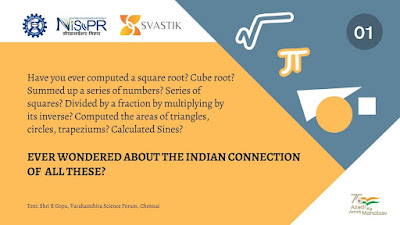
The National Institute of Science Communication and Policy Research (NIScPR) at CSIR has created and released a few posters on Indian mathematics to promote awareness.

They have shared them on Twitter 

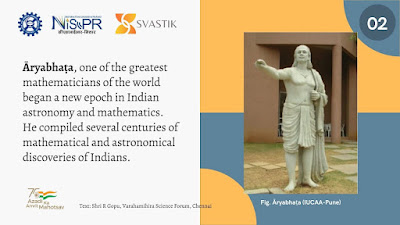
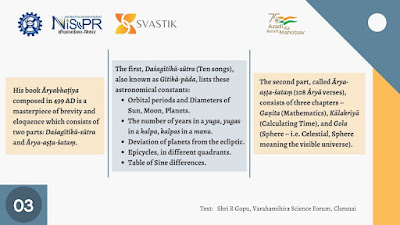
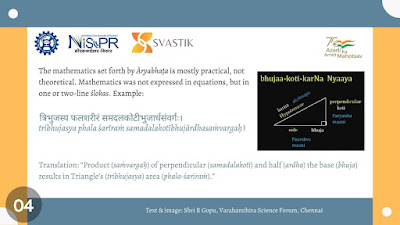
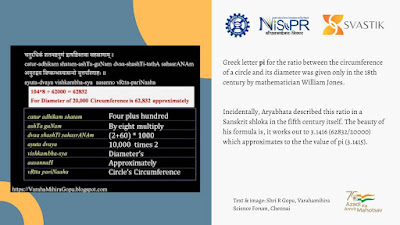
Here are the posters : they are about the contributions of Aryabhata. I hope they are useful to enthusiasts. My essays about Aryabhata as part of a series in Swarajya, give more details about his contributions. 


A podcast on Aryabhata with Moumita Mazumdar of CSIR NiScPR

Indian Mathematics - Introductory series: Swarajya magazine
Aryabhata - essay in The Week magazine


Thursday, 9 December 2021

Lesser known quotes of some philosophers

"Sambar tastes very different from rasagolla" - Swami Vivekananda

"Desire is the root cause of capitalism" - Henry Ford

"Truth alone triumphs. Except during an election" - Vashishta

"Those who dont learn from geography are condemned to use Google maps" - Sergey Brin

"Writing begins with the letter a, like the world begins with the Foremost Bhagavaan" - Tiruvalluvar

"You never learnt Chinese, did you, Tiruvalluvar?" - Confucius

"This goat is eating better than me" - MK Gandhi

"Should I free my slaves or go fly a kite?" - Benjamin Franklin

"Now that I have freed the slaves, should I give women the right to vote? Too soon?" - Abraham Lincoln

"I wonder if I can clean myself by walking in the rain or should I soak in a bathtub?" - Archimedes

"It was amazing. There are thousands of these college graduates from China and India, who are good at mathematics, engineering, even writing software. Most of them could also speak English." - Larry Ellison

"Even the Greeks can do mathematics" - Varahamihira

"Deadbeats of the world, unite. We need to reduce the workload of workers" - Karl Marx

"I wonder if there is an invisible leg. Or a finger" - Adam Smith

"Even when I dont think, I still am. I wonder why." - Descartes

"Anger cools down. Entropy or something" - Avvaiyaar

---

Some other pearls of my wisdom