Showing posts with label art. Show all posts

Thursday, 2 July 2026

கும்பகோணத்தில் ஒரு பாராட்டு விழா

சென்னை எழும்பூர் கவின் கலை கல்லூரியில் பேராசிரியராக பணியாற்றி, சமீபத்தில் ஓய்வு பெற்ற திரு சிவராமகிருஷ்ணனையும்,  கும்பகோணம் கவின் கலை கல்லூரி முன்னாள் முதல்வர்கள் திரு அருளரசன், திரு ரவி இருவரையும் கௌரவிக்கும் ஒரு பாராட்டு விழாவை இம்மூவரின் மாணவர்கள்  நடத்த உள்ளனர். வரும் சனிக்கிழமை ஜூலை 4, காலை 930 முதல் முழு நாள் நிகழ்வு. இதில் என்னையும் பேச அழைத்துள்ளனர்; காஞ்சி கைலாசநாதர் கோவிலை பற்றி ஒரு உரையாற்றுவேன். பேராசிரியர் சிவராமகிருஷ்ணன் அஜந்தா ஓவியங்களை பற்றி உரையாற்றுவார். காலையில் நாட்டியத்துடன் விழா தொடங்கும். மதியம் மாணவர்களின் கலந்துரையாடல். நிகழ்ச்சி நிரல் இதோ.

கும்பகோணத்தில் இந்த சனிக்கிழமை இருந்தால் இந்த விழாவில் கலந்து கொள்ள அன்புடன் அழைக்கிறேன். சிவராமகிருஷ்ணன் எதை பேசினாலும் மிகவும் சுவாரசியமாக, கலை ரசனை பொங்க, கேட்போர் காதில் தேன் வந்து பாயும். அரிய வாய்ப்பு.


11-ஜுலை

விழாவிலிருந்து சில படங்கள்:

திருவாளார் அருளரசன், சிவராமகிருஷ்ணன், கோபு, ரவி
படம்: விஸ்வநாதன்

கோபுவின் உரை
படம்: விஸ்வநாதன்


Wednesday, 29 January 2025

A Sculptor's muse


Softly O softly she floated ashore
On the waves of his dream to his mind's very core
Like the dew on the grass from the soul of the breeze
In the still of the night with the greatest of ease

Smoothly O smoothly he etched in her shape
For devas to gasp and manushas to gape
Firmly O firmly he hammered the stone
'Til rock came alive as flesh blood and bone

Her lips promised love, her breasts spoke in rhyme
Her hips gently prodded her anklets to chime
She smiled with her eyes and laughed with her heart
As he breathed into her the essence of art

On the return from Jhansi after January 2025 THT Site Seminar in northern Madhya Pradesh, this sculpture popularly known as Gyaraspur lady, now kept in the Gujari Mahal museum in Gwalior fort, inspired this poem above. "Gyaraspur lady" is the sculpture of a shaala-bhanjika from a place called Gyaraspur near Vidisha, which is south of Gwalior. In 2019, THT site seminar was conducted in areas around Bhopal including Vidisha and Gyaraspur. That's when we came to know about it, when Vallabha Srinivasan gave a preparatory lecture about it. Mr Venkatesiah, retired Regional Director of ASI, accompanied us as an expert, and informed us that this statue was under high security, behind a barricade, because of several attempts at stealing it. While some were waxing eloquent about the grace, beauty, allure, posture and other aspects of this sculpture, I was reminded of an apsara sculpture from Nageshvaran temple in Kumbakonam, Tamilnadu - one of four such beautiful apsara figures in that temple. This particular apsara, west of the Dakshinamurthy shrine, is soft, supple, demure, enchanting. When I mentioned this, Sowparnika, who was nearby showed it from her photo collection in her phone. The Gyaraspur lady photo is by Suresh Priyan, who was also on the Site Seminar.

Phrases and the tune of Sarojini Naidu's poem, "The Palanquin Bearers", which I had read in school, and loved for the very Indian sounding chandas/yaappu (prosody) of this English poem, floated into my thoughts. On the return journey by train on January 27, I wrote this poem - it applies to both sculptures and the shilpis who sculpted them.

Gyaraspur lady - photo by Suresh Priyan


Apsara at Kumbakonam Nageshvaran temple - photo by Sowparnika


Related Essays in my Blog


Thursday, 29 August 2024

Bharat Mata statue of Subrahmanya Bharathi

Bharata Matha terracotta image

Bharatha Matha Terracota figure of composite unit of India, as visualized by Mahakavi Subramanya Bharathi and his close associates, Mandayam Brothers S Thirumalachari, S Srinivasa Chari and S Parthasarathy Iyengar in the year 1916 during their exile at Pondicherry.  This idol was discreetly smuggled to Madras and taken in procession during Anti British movements. It has lost the Ceylon part which was in the form of a lotus bud at the feet,  during an encounter with British police.

Vande mataram.

------------

This text above, along with this picture, was shared by VK Srinivasan in our Tamil Heritage Trust Whatsapp group.

The Mandyam brothers owned a Tamil newspaper called Swadesa Mitran, in Madras (Chennai) and they hired Subrahmanya Bharati, the poet, as its deputy editor. Bharati today is primarily known throughout the Tamil speaking world as poet extraordinaire, a Mahakavi, whose patriotic poems about India, the Tamil language, are well known. But he did not earn much from his poetry; his primary income was as a journalist. He is considered THE pioneering journalist of the Tamil language - he wrote political essays advocating the expulsion of British rule (inspired by Bala Gangadhara Tilak), he introduced the first cartoons in Tamil newspapers, he wrote essays on science and technology, translated essays and poems from various languages of India like Bengali, Hindi, Marathi, and English. He was considered an extremist in those days, a follower of Bala Gangadhara Tilak, as opposed to the moderates led by the lawyers of Madras, led by the indomitable V Krishnaswami Aiyar. He introduced the Bengali phrase Vande Mataram into Tamil, without modifying the words, and made it popular. He also published an English newspaper, for years.

A cartoon published by Subramania Bharati
Gandhi as a cow, the British as tigers

He formed a patriotic group with VO Chidamaram Pillai, Subramania Siva, Aurobindo Ghosh and VaVeSu Iyer. VO Chidambaram a lawyer of Thoothukkudi (Tuticorin), an old harbour city near Kanyakumari, is famous for starting a shipping company. He was later arrested and sentenced to jail, where he was also sentenced to be yoked (Literally a wooden yoke, like a plough) to an oil-press (instead of a bull) and forced to pull the oil-press.

Bharathi and others condemned this arrest and cruel sentence. The British issued an arrest order for Bharati for one of his essays, and he escaped to Puducheri (Pondicheri) which was under French rule, taking the advise of his friends. He spent nearly ten years in Pondicheri, in self-exile. At some point he was exhausted with his exhile and came back to British India - that is Madras province. He was arrested in Kadaloor (Cuddalore) and sentenced to jail, but was released after promising not to write against British government policies. Sadly he died a few years later. 

The Mandayam family, which ran the SwadesaMitran newspaper, and had hired Bharati as a writer and assistant editor, somehow inherited the terracotta idol of Bharata Matha. Decades later, after independence, N Balasubramanian, a mathematician and cryptologist, and an avid lover of Tamil literature and especially Subramaniya Bharati, was an active membre of Delhi Tamil Sangam. By the 1960s, a significant number of Tamils had moved to Delhi, a vast number of them employed as bureaucrats in the Government of India, and quite a few in academic circles also. The Delhi Tamil Sangam, regularly held meetings in which they discussed literature, hosted visiting writers, speakers, artists, etc; conducted music concerts (mostly Carnatic music) and Tamil plays and so on. Balasubramanian, who wrote under the Tamil pseudonym Nagupoliyan was one of the very active members of this group. On one of his travels, a member of the Mandayam family gave him the Bharatha matha statue for safekeeping. From then on, every monthly meeting of the Delhi Tamil Sangam started with a prayer and puja to this Bharata Matha statue. In 1982 the centenary year of Subramaniya Bharathi, year long celebration called Bharati 200 was conducted. It was called Bharathi 200 rather than 100, in the hope that Bharathi would be remembered for at least another hundred years. 

When Balasubramanian retired and settled down in Madras (Chennai), he brought back this image with him and somewhere along the way, the Bharata Matha statue returned to the Mandyam family. During the condolence meeting of R A Padmanabhan in 2014, who wrote a biography of Subramaniya Bharati, I met one of the stalwarts of the Mandayam family - Mandayam Parthasarathy Iyengar, then around 96 years old; he was one of the speakers.


Mandayam Parthasarathi Iyengar at 
condolence meeting of RA Padmanabhan, 2014


I met "Nagupoliyan" Balasubramanian around 2010. We called him Balu sir and learned about the various aspects of his life only later. He announced a weekly Sanskrit class then, and I began to attend it regularly until 2015 or so. I didn't learn much Sanskrit, but learnt a lot about sanskrit and also learnt a lot about Bharati and a many fascinating aspects of Tamil literature from him. At this point he only had a photo of this Bharata Matha statue with him. In December 2010, he decided to donate a collection of his books on Bharati and his Bharati memorabilia, including clippings from several newspapers and magazines to the Mahakavi Bharati School in Kasuva village, near Thiruninravur, run by Sevalaya. I accompanied Balu sir and several of his writer friends, where stalwarts like writers Ja Ra Sundaresan, and Rani Maindan spoke. Balu sir had already donated some of his collection to the Bharati Illam, a memorial house in Tiruvallikeni near the Parthasarathi temple, and they are on display there.

Sevalaya founder Muralidharan speaking
Balasubramanian, Ja Ra Sundaresan, Prof Va Ve Su on stage
Mahakavi Bharati school, Kasuva


Memorabilia from Balasubramanian collection 
Mahakavi Bharati school, Kasuva


Cryptography class in Balu sir's residence, Kotturpuram

Balu sir passed away in 2019. He told the story of this Bharata Matha idol several times. Once during the performance of an experimental play titled, Chennaiyin Gnanaratham, compered by Vallabha Srinivasan, wife of VK Srinivasan, Balu sir simply walked on to the stage and narrated this story. It became a hit

A few years later, I visited Bharathiyar Illam in Tiruvallikeni with Balu sir, and just outside, we were pleasantly surprised to meet Mandayam Parthasarathy Iyengar, the aged gentleman at the RA Padmanbhan condolence meeting in the front row. He was a then a resident of Tiruvallikeni. A few years back, at the age of 102, he featured in several news channels as the oldest persons to vote in the election (2019 elections, I think). He has since passed away.

VK Srinivasan's whatsapp photos brought back some memories, and hence this blog. It may be some interest that one of the pillars in a mandapam of the Mylapore Kapalishvara temple, has an image of Bharatha matha, which looks very much like this one. This mandapam was constructed in the 20th century.

Bharatha Matha sculpture
Mylapore Kapalishvara temple, Madras

Related blog essays


Wednesday, 1 May 2024

Tiruppudaimarudur Paintings by Prof Baluswamy


TiruppudaiMarudur Paintings by Prof Baluswamy

On May 1, 2016 I attended the launch of a Tamil book titled “Chitrakoodam – Tiruppudai Marudur paintings.” The book was authored by Prof Baluswamy of Madras Chrisitian College, Tambaram, whose earlier books “Arjunan Tapasu” and “Krishna Mandapam” also about famous monuments in Mamallapuram are outstanding works of research. Speakers included botany professor Dayanandan of MCC, artists Trotsky Marudu, Smt of Hindu Religious and Charitable Endowments department, photographer Narasimhan and conservator and documentary film-maker MV Baskar. These are notes from their talks which I posted on Facebook, on that day, which I have now copied and edited for this blog. Prof Baluswamy himself delivered a vote of thanks, which I don’t seem to have taken notes for. The event was the Goethe Insitute auditorium, Rutland Gate, Nungambakkam, Madras.

I first heard of these paintings at the Tiruppudaimarudur temple from Prof Baluswamy himself at the 2012 Tamil Heritage Trust Pechu Kacheri on Paintings of India, which was held in the Tatvaaloka auditoirum, Eldams Road, Teynampet in Chennai. These paintings and the unusual military history they recorded were part of his talk which was about Nayak era paintings of the Tanjavur and Madurai Nayaks. It was recorded along with other talks at the Pechu Kacheri but none of these have been yet edited and made available to the public.

The book was only released last year and was available at the Chennai Book Fair in Nandanam. An earlier book on these paintings by Dr Kannan director of Chennai Egmore museum, was presented to me as a gift around this time, for my talk and guided tour about the Amaravati gallery of the Egmore museum, by the then Director, Dr Kavita Ramu. Dr Kannan who reshaped the Amaravati gallery also undertook a restoration/renovation effort of these murals and has recorded them in his book.

The notes from the talks at the 2016 book launch follow:

Prof Dayanandan, MCC

Lawrence Surendra played a major role in developing this book, "Chitrakoodam - Tiruppudaimarudur Oviyangal", by using MCC as a powerful resource to research and collate.

Baluswamy is our treasure. That others share him invokes jealousy and pride. We had a great asan at MCC in 60s Gift Siromoney, who pulled all of us into several fields. we thought he had reached a peak with Arjuna's penance, but he has breached new barriers with this book on Tiruppudaimarudur paintings. He has a wide variety of knowledge in depth.

Nagaswamy threw a bomb that Rajasimha built everything in Mallai. Gift Siromoney measured all sculptures with scales. We discovered that no male was depicted before 720. Baluswamy went beyond all this. He brought whole new theories to scholarship on Mallai. Using biology, sculpture sense etc. He discovered that the painting in Tiruppudaimarudur depicted the Tamraparni battle between Vijayanagar and Travancore. After the advent of Portuguese. I discussed Columbian exchange with Baluswamy, after which pineapple potato chili etc entered India.

Sangam Era marudu tree would have been lagerstomia. Sthala trees are not more than 200 or 300 years old, opined a botany professor in Madras University.

Baluswamy makes the distinction between mythology and history when teaching. No humans in India before sixty thousand years. So please forget Lemuria etc. When Africans settled the world. The common mother of all living humans lived in Africa 180000 years ago. Based on mitochondrial evidence.

Who ordered the paintings at Tiruppudaimarudur? Did the painters paint what they were ordered to? The book will discuss all these.

Panelists and audience - photo by VK Srinivasan


Trotsky Marudu, artist

I grew up with the Nayak paintings around poRRamarai tank in Madurai Meenakshi temple. All now eradicated. This tragedy bothered for a longtime. Western realism combined with Indian artistic tradition only in the Nayak period. My predecessors like Adimoolam worked at Weavers Institute. Government photographers captured paintings of Alagar Koil, Avudaiyar Koil etc and they used those designs in weaving textiles.

Even Adimoolam has not seen the Tiruppudaimarudur paintings. MV Baskar, Sarangan, myself and Baluswamy had the opportunity to see them after 2000. In 1990s I could not go past the first level and it was too dark to see these paintings. After the Danielles, Europe saw India in pictures. Parsi theater gave another visual perspective to Europeans. Later Ravi Varma printed his own paintings, made with costumes used by Parsi theater, most of which became popular across households in India. Marathi cinema 's look influences films of South India films now, having few Tamil identity. Dadasaheb Phalke Ravi Varma's Contemporary, and the artists who worked in Bombay film studios determined the look of Telugu and Tamil cinema. Film arts, calendar art and magazine art became the defining art of Tamil country (disconnected from the temple art of the Nayak era).

For several decades maps and images have been eradicated from Tamil books as cost cutting measure.

European books for children had paintings from Egyptian temples and pyramids and much less text. Fourteenth century venetian art decorated such books about Egypt and even Hollywood actors. Indian books do such a lousy job. Hyder Ali for example depicts him practically as a beggar though there are wonderful pictures of him. Sadly Tamil culture is mostly verbal. We pay poor attention to visual art.

Thadagam published a very visual book and they are doing this with Baluswamy's book on Tiruppudaimarudur. This is a treasure for the world at large not just Tamils.

Smt Kavitha of HR&CE

Of the thirty eight thousand temples under HR&CE about fifty temples have paintings like Tiruppudaimarudur. We have permitted several people to photograph paintings for scholarly study. Our department is blind to a lot of technology, and have inadequate in situ scholarly talent. We are now restoring temple paintings. INTACH restored kuRRalam Chitra Sabha, then another group complained that INTACH had ruined them by using very bright colors.

There are wooden panels at every level in Tiruppudaimarudur gopuram. Insect infestation and bats were big problems. Water seepage is another problem. We used to use cement, then combination mortar, and now we use lime mortar. We don't touch up the paintings. In ASI chemists do the job. Our sthapathi said Silpa Sastra shows several sources of paint including sand and stone colors, not just vegetable dye.

There are PhDs who have published with no reference to the temple or HR&CE. Why can't you give copies to the temple and our department??

Please cooperate with us. Don't have an antagonistic approach. We find it very difficult to find talent for restoration. A text called "Aalaya nirmana bimba Lakshana" shows us how to restore temples. Materials die, just preserve the monument, not just the materials. Expertise is hard to come by. Maintaining thousands of temples have to be maintain 38,000 temples with income from 2000 temples. It's not our intention to destroy, we do it out of ignorance.

Or by good intentions to save a monument or protect public from collapsing roof etc (one such attempt at Srirangam thayar shrine caused the paintings to crumble).

I hope at least Prof Baluswamy will acknowledge HR&CE

Episodes from the live of Gnanasambandar
- a slide from a PPT


A painting of Portuguese horse trade

Photographer Narasimhan -  Documenting the paintings

Our long time dream is getting fulfilled. I must acknowledge one who has not been acknowledged by other speakers. Mrs Baluswamy approved all the great expenses involved. Two types of people visit Baluswamy, those who go to learn and those who go to plagiarize.

Amutharasan came forward to publish the book. This pre publication is a special effort.

The technology to document was brought to us by Sarangan and Baskar.

Tiruppudaimarudur is a rare temple to still have original Nayak Era paintings. Most temple paintings have suffered great change. We have documented Alagar Koil paintings. They are valuable historical evidence. Baluswamy's effort to understand the paintings has been phenomenal. Investigating the Tamraparni war took four years. Lots of discussions with Sanskrit scholars to understand historical narrations of the war. Retired Supreme Court Justice Ratnavel Pandyan has been wonderfully helpful in this research.

We held several conferences to convey the importance to students and public. We ran a workshop at Srirangam for temple executive officers to our preserve sculptures and paintings.

One of the quite but wonderful servants of the documentation of this book is Mr Uthraadam, a PhD student of Baluswamy. This books is a milestone in tamil history.

MV Baskar - Visual documentation

Thirteen years of Hard labor. Documentation is not mere photography but Archaeometry. Digital cameras of 8Megapixels entered India in 2003. Now we shoot with 80Mp cameras. We composed each photo of A4 size, so a wall painting will be photographed as sixty different shots. Lighting is uneven so the same red may show up in different shades in adjacent shots. We used gray cards to give us color context.

Most people shoot the most photogenic scenes. We shot everything even the missing pieces which had only damaged wall or even graffiti, so we can reconstruct the painting. All paintings tend to be narrative paintings in temples, not pattern paintings. Vasanta mandapam of Alagar Koil has lovely Ramayana depiction. Tirugokarnam has Ramayana as we exit the temple, a structural narrative.

We had two photographers just for paintings and two for all other aspects. Digital tempts them to shoot limitlessly. We threw away two days worth of photos because we could not put them together.

So we had to shoot after planning, by mapping the pictures first. Cameras have no file structure. We had to map and key in advance and then collate photos in that order.

This is scalable vector art, machine readable. I worked with a Kalamkari artist from Andhra. We need pigment analysis and such equipment is only in Aurangabad and Bombay. We picked up all the fallen paint flecks and put them in zip lock bags.

Every painting in every temple has been over painted. They can only be seen with infrared photography. An infrared camera is twenty thousand dollars. Now it is much cheaper. We can rig one. I've shot Ladakh Buddhist monastery paintings with infrared cameras and they are also multi layered over time.

Academically, art and design schools lack tangible programs to educate students. We need multiple accredited programs at respected colleges to do this. Paintings also are accompanied by inscriptions or text.

The paintings depict several musical instruments. We recorded sounds from such musical instruments to create a multi media presentation. History can be far more engaging than only Archaeology. Money shortage is no longer an issue.

I'm delighted Art Painting has finally come to Tamilnadu. This is quite popular in Bombay Delhi etc but so far unsuccessful here. Hotels ask for paintings but haven't paid and ran some people bankrupt. But that is changing

----End of Lecture notes---

Acknowledgement I downloaded some photos of Powerpoint presentations on screen at the lecture, taken by VK Srinivasan during the book release and posted in the comments of my Facebook and added them in this blog. I presume the original photos used in the Powerpoint are by photographer Narasimhan, who was one of the speakers.

Related Links

Prof Baluswamy on Arjuna’s Penance in Mamallapuram

Prof Dayanandan’s lecture on Evolution at Varahamihira Science Forum

MV Baskar on Preserving Ramayana Murals at Tamil Heritage Trust

Index of My essays on Art

Index of  Lecture Notes in this blog

Friday, 8 December 2023

TEDx Talk at Saveetha Pupil school

This TEDx talk has been uploaded to Youtube - you can see it here 


-----

I am one of six speakers this Sunday December 10th at the TEDx conference at Saveetha Pupil school. It is a ticketed event and the registration form and ticket details are in the link below:

Embark on a journey of curiosity, change, and limitless possibilities at TEDxThe Pupil International School Youth's 'Prakriti – Embracing the Change'. Our visionary speakers will ignite your mind with inspiring perspectives and groundbreaking ideas. Be a catalyst for transformation. Secure your spot and be part of the evolution! 🌍
:
📅 Date: Dec. 10th 2023
🕒 Time: 4:00 pm to 7:30 pm
📍 Location: The Space, The Pupil auditorium
:
👉 Book Your Seat:
Kindly note that seats are limited, so don’t miss the opportunity!


Monday, 28 February 2022

நாகசாமி - கற்றதும் பெற்றதும்

Smt Vallabha Srinivasan has translated my tribute to Dr Nagaswamy in Madras Musings into Tamil.

மதராஸ் மியூஸிங்ஸ் இதழில் வந்த ஏன் கட்டுரை - தோழி வல்லபா சீனிவாசனின் தமிழாக்கம்

------------------------------

தினசரிகளில் வரும் தொல்லியல் வரலாற்றுக் கட்டுரைகளின் மூலமாகவே முதன் முதலாக டாக்டர் ஆர் நாகசாமியைப் பற்றி அறிந்தேன். 2009 ம் ஆண்டு மாமல்லபுரம் பற்றியதான அவரது கட்டுடைக்கும் ஆராய்ச்சிக் கட்டுரையைப் படித்தேன். அதில் அவர் “மாமல்லபுரத்திலிருக்கும் அனைத்துக் கோயில்களையும் காட்சிச் சிற்பங்களையும் கட்டியது ராஜசிம்ம பல்லவனே!” என்ற கருத்தை முன் வைத்தார். அதுவரை ஜூவோ துப்ரே (Jouveau Doubreil) என்பவர் 1915 ல் முன்வைத்த, ‘மாமல்லபுரச் சின்னங்கள் முதலாம் நரசிம்ம பல்லவர், அவரது பேரன் பரமேஸ்வரன், அவரின் மகன் ராஜசிம்மன் ஆகிய மூவராலும் கட்டப்பட்டவை’ என்ற கருத்தே, ஒரு நூற்றாண்டு காலமாக வரலாற்றாசிரியர்களிடையே நிலவியது. அந்தக் கருத்தை கட்டுடைத்த இந்த ஆய்வு ஒரு மர்ம நாவல் படிப்பது போன்ற உணர்வை ஏற்படுத்தியது. அதற்காக அவர் சேகரித்து முன்வைத்த,

கட்டுமானக் கலை, கல்வெட்டு, அழகியல் ரசனை, கவித் திறன், வரலாற்று ஆதாரங்கள் சார்ந்த பல்வேறு வாதங்கள் பிரமிக்கத் தக்கவை.
பொதுவாக நாகசாமியை ஒரு பெரும் முதியவராக, தமிழ்நாட்டுத் தொல்லியலின் பீஷ்ம பிதாமகராகவே நினைவு கூர்கிறோம். அது அவருக்கு 150 ஆண்டுகளுக்கு முன்பிருந்தே தொல்லியலில் அவரால் பெரிதும் மதிக்கப்படுகிற, T N ராமச்சந்திரன், சிவராம மூர்த்தி போன்றோரை அவமதிப்பது போலாகும். இவர்களுடன் நாகசாமியும் பணியாற்றி கற்றவை பற்பல. அவரது சாதனைகள் அவர் இளைஞராக இருந்த போதே வந்தவை என்பதையும் மறந்து விடுகிறோம். ராஜசிம்மன் பற்றிய ஆய்வுக் கட்டுரையை எழுதிய போது அவரது வயது 32! தென்னிந்திய வரலாறு என்ற பெரும் படைப்பின் முன்னுரையில் K A நீலகண்ட சாஸ்திரி, இளைஞர் நாகசாமியின் விலைமதிப்பற்ற ஆலோசனைக்கு நன்றி கூறி இருக்கிறார்.
நாகசாமி ஒரு பிரமிக்கத்தக்க இளைஞராக இருந்தார். அவர் பல ஆண்டுகள் உயிரோடிருந்து பல துறைகளை மேம்படுத்தியது நம் அதிர்ஷ்டமே! வரலாறு, நடனக்கலை, இசை, இலக்கியம், மதம்…தொல்லியலும் கல்வெட்டியலும் மட்டும் அல்ல. வில்லியம் ஜோன்ஸ், அலெக்சான்டர் கன்னிங்ஹாம் போன்ற சிறந்த ஆங்கிலேய ஆராய்ச்சியாளர்கள் தொடங்கி வைத்த ஒரு கலாசாரத்தின் விளக்காகத் திகழ்ந்தார் நாகசாமி. மேலும் தமிழிலும், சம்ஸ்கிருத்த்திலும் அகண்ட ஆழ்ந்த இலக்கியத் திறமை கொண்டவராகவும் இருந்தார். பகுத்தறியும் ஆராய்ச்சியில் எவ்வளவு மதிப்பு கொண்டவராக இருந்தாரோ, அவ்வளவு தன் பக்தியிலும் பெருமை கொண்டவராக எப்போதும் நெற்றியில் மூன்று பட்டை விபூதியுடன் காணப் படுவார்.
தமிழ் பாரம்பரிய அறக்கட்டளையைத் துவங்கிய, ஐஐடி டெல்லியில் பணியாற்றிய பேராசிரியர் சுவாமிநாதன் ஏற்பாடு செய்திருந்த மாமல்லபுரம் கல்விப் பயணத்திற்காக இவரது ராஜசிம்மன் ஆய்வுக் கட்டுரையைப் படிக்க நேர்ந்தது. சுவாமிநாதன் நாகசாமியுடன் சென்ற சித்தன்னவாசல் பயணத்தை நினைவு கூர்ந்தார். சித்தன்னவாசலில் பழைமையான சமண ஓவியமும், பாண்டியர் கால தமிழ் வட்டெழுத்துக் கல்வெட்டும், தமிழ் பிராமியிலான சங்க காலக் கல்வெட்டும் இருக்கின்றன. நாகசாமி உற்சாகம் கொண்டவராக அங்கு ஆடு மேய்த்துக் கொண்டிருந்த சிறுவனிடம் ஒரு காகித்த்தில் இந்த எழுத்துக்களை எழுதிக் காண்பிக்க ஆரம்பித்தாராம். அந்த ஆடு மேய்க்கும் சிறுவன் ஒரு பெரும் உலகறிந்த ஆராய்ச்சியாளர் தனக்கு கல்வெட்டு சொல்லித் தருகிறார் என்று அறிந்திருப்பானா?
இவ்வாறு இந்நாட்டின் ஒவ்வொரு பிரஜையும் இந்நாட்டு பாரம்பரியப் பெருமையை அறிந்து பெருமை கொள்ள வேண்டும் என்று எண்ணியவர் நாகசாமி. தொல்லியலும், கல்வெட்டியலும் சமூகத்திலிருந்து விலகி அறிவுசார் கல்வி அரங்குகளிலும், காட்சியகங்களிலும் தீவு போல இருப்பதை அவர் விரும்பவில்லை. வரலாற்றுச் சின்னங்கள் சுரண்டப்பட்டு கருங்கல் குவாரிகளாகவும், ஆயிரம் வருடம் பழமை வாய்ந்த ஓவியங்கள் வெள்ளை அடிக்கப் பட்டும், வெங்கலச் சிலைகள் திருடி விற்கப் பட்டும், புதுப்பிக்கப்படுகிறது என்ற பெயரில் பழமையான சின்னங்கள் அழிக்கப்படுவதுமான அவல நிலையில் இருக்கும் இக்காலத்தில் இதைவிட முக்கியமானதாக எது இருக்க முடியும்?
இந்தியாவிலேயே முதன் முதலாக ஒரு மாநிலத்தில் தொடங்கப்பட்ட தொல்லியில் துறையான தமிழ்நாடு தொல்லியல் துறைக்கு, 1966 ல் நாகசாமி தலைமை ஏற்றார். புத்தகங்கள் விலை மிக்கதாகவும், நூலகங்கள் அரிதாகவும் இருந்த கால கட்டத்தில் பல சிறிய விலை மலிவான துண்டுப் பிரசுரங்களை பதிப்பித்தார். பன்னிரண்டு மாவட்டங்களில் அருங்காட்சியகங்கள் அமைக்க அரசாங்கத்தை வற்புறுத்தினார். இதற்கு முன் சென்னையிலும், புதுக்கோட்டையிலும் மட்டுமே அருங்காட்சியகங்கள் இருந்தன. மற்ற மாநில தொல்லியல் ஆராய்ச்சியாளர்கள் கோயில் சுவர்களிலுள்ள தமிழ்க் கல்வெட்டுகளை இவரது சீடர்கள் நேரடியாகப் படிப்பதைக் கண்டு வியந்தனர். அவர்கள் மாநிலங்களில் பதிவுப் பிரதி எடுக்கப் பட்டு, பின்னர் பல நாட்கள் படித்தறியும் ஒரு நீண்ட செயல்முறையாக இருந்தது இது.

அவருக்கும் சில வீழ்ச்சிகளும், சர்ச்சைகளும், அரசியல் சார்ந்த கருத்துசார்ந்த மோதல்களும் இருந்தன. அவர் ஒரு முறை பதவி நீக்கம் செய்யப் பட்டார். விசாரணைக்குக் காத்திருந்த நேரத்தில் அவர் வருந்தி அமர்ந்திருக்கவில்லை. சிறையிலிருந்த போது புத்தகங்கள் எழுதிய இந்திய விடுதலைப் போராட்டத் தலைவர்களைப் போல, தன் கலை மற்றும் இலக்கியத் திறமையை முழுவதுமாக உபயோகித்து, "ராஜராஜ சோழன்," "ராஜேந்திர சோழன்," "மணிமேகலை," "அப்பர்" போன்ற வரலாற்று, சமய நாயகர்கள் மீதான பல நாட்டிய நாடகங்களை வடிவமைத்தார். கபிலா வாத்ஸ்யாயன் என்பவருடன் இணைந்து சிதம்பரம் நாட்டியாஞ்சலி என்ற நடன விழாவைத் தொடங்கினார். அவரது பல நாட்டிய நாடகங்கள், நாட்டின் புகழ்பெற்ற கலைஞர்கள் பங்குபெற்று இந்தியாவில் மட்டுமின்றி, ஜெர்மெனி, ஸ்வீடன், அமெரிக்கா, கனடா போன்ற வெளிநாடுகளிலும் அரங்கேற்றப்பட்டன.

தமிழில் சங்க இலக்கியம் பற்றி "யாவரும் கேளிர்" என்ற நூலையும், தமிழ்நாட்டின் ஓவியம் சிற்பக் கலை பற்றி "ஓவியப் பாவை" என்ற நூலையும் பொது மக்களுக்காக எழுதினார். ஆங்கிலத்தில் பல ஆய்வுப் புத்தகங்களை எழுதினார் - "சஹ்ருதயா"; "காஞ்சிபுர விஷ்ணுக் கோயில்கள்"; "பழமையான தமிழ் சமுதாயமும் அதன் சட்டங்களும்".


"வெங்கலச் சிலைகள் (சோழர் காலம்)"; "மாமல்லபுரம்"; "கங்கை கொண்ட சோழபுரம்" - தமிழ் நூல்களையும் எழுதினார் . அவரது இணைய தளம் அவரது புத்தகங்களும், கட்டுரைகளும் கொண்ட ஒரு பல்கலைக் கழகம்.
சம்ஸ்க்ருத இலக்கிய வார்த்தைகள் பரிச்சயம் இல்லாத மக்களைக் கருத்தில் கொண்டு, பல சிற்பங்களுக்கு தேவாரம், திவ்யப் பிரப்பந்தம் சொற்றொடர்களிலிருந்து அழகான தமிழ்ப் பெயர்களை உருவாக்கினார். "மாமயிடன் செறுக்கறுத்த கோலத்தாள்" என்று மஹிஷாசுர மர்த்தினியையும், திருமங்கை ஆழ்வார் சொன்ன கடல் மல்லை கிடந்த கரும்பு என மாமல்லபுர அனந்தசயன விஷ்ணுவையும் வர்ணித்தார். வலம்புரம் என்ற இடத்தில் கிடைத்த தானம் பற்றிய கல்வெட்டில் ‘வட்டணைகள் பட நடந்த நாயகர்’ என்றிருந்தது. யாருக்கும் அதன் பொருள் விளங்கவில்லை. ஆனால் நாகசாமி அப்பரின் ஒரு பாடலில் “வட்டணைகள் பட நடந்து மாயம் பேசி வம்புறத்தே புக்கங்கே மன்னினாரே” என்று பிக்ஷாடனர் குறிப்பிடப் படுவதைக் கூறி, சோழர் கால பிக்ஷாடனர் ஐம்பொன் சிலையுடன் இதை இணைத்தார். இது அவரது தனித்துவமான திறமை.
மூன்று மொழிகளிலுமான பரந்த ஞானம், வேதம், ஸ்மிருதி, ஆகமங்கள், பரத நாட்டிய சாஸ்திரம், சம்ஸ்கிருத காவியங்கள் இவற்றில் இருந்த ஆழ்ந்த ஆளுமை, அதே போல தமிழில் தொல்காப்பியம், சிலப்பதிகாரம், இதர தமிழ்க் காப்பியங்கள், சங்க இலக்கியம், பக்தி இலக்கியம் போன்றவற்றில் இருந்த புலமை, கல்வெட்டில், வரலாற்றில் இருந்த திறமை, மூன்று நூற்றாண்டுக்கான ஆங்கில ஆராய்ச்சிக் கல்வியின் அறிவு ஆகியவை இவரை அரிதிலும் அரிதான ஆராய்ச்சியாளராக அடையாளம் காட்டியது. நாட்டில் இவ்வளவு பரந்த ஞானம் உள்ளவர்களை விரல்விட்டு எண்ணி விடலாம். அதிலும் திறம்பட எழுதவும், பேசவும் முடிந்தவர் சிலரே.
சில ஒற்றைப் புத்தக பண்டிதர்களும், ஒரு மொழிப் புலவர்களும் நாகசாமி மேல் ஏளனத்துடன் வசைமாறி பொழிந்தனர். சில நேரம் அவர்களுக்கும் தக்க பதிலளித்தார்.

சில தனிப்பட்ட நிகழ்வுகள் - காஞ்சி கைலாசநாதர் கோயிலை, நான் புரிந்து கொள்ளத் திண்டாடிய போது ‘அதைக் கட்டிய ராஜசிம்மன் அந்தக் கோயிலை அதிமானம் அதி அத்புதம் என்றே வர்ணிக்கிறான் என்று எடுத்துக் காட்டினார். அதாவது "சரியாக அளவிடப்பட்ட அற்புதம்" என்பது. அது என் கண்களைத் திறந்தது : அந்த ராஜசிம்மனின் வார்த்தைகளைக் கொண்டே அந்தக் கோயிலை அணுக வேண்டும் என்று புரிந்து கொண்டேன். 2014 ல் நாகசாமி அவர்களை கௌரவிக்கும் விதமாக நடத்தப்பட்ட தமிழ்ப் பாரம்பரிய அறக்கட்டளையின் பேச்சுக் கச்சேரி நிகழ்வுக்காக நாகசாமி அவர்களின் பன்னாட்டு ஆய்வுக் கட்டுரைகளை அலசும் கௌரவத்தை சுவாமிநாதன் எனக்கு அளித்தார். கைலாசநாதர் கோயிலில் ராஜசிம்மன் தன் அழகிய எழுத்துக்களில் பொறித்து வைத்திருந்த பட்டப் பெயர்கள் - ‘அத்யந்தகாமன்’ (எல்லையில்லா விருப்புடையவன்), ‘கலாசமுத்ரன்’ (கலைக்கடல்). இரு பட்டப் பெயர்களையும் ஒரு சட்டையில் தைத்து எழுதி அவருக்குப் பரிசளித்தோம். அதை ஆனந்தமாக அடுத்த நாளே அணிந்து கொண்டார்.

சட்டையில் அத்யந்தகாமன், கலாசமுத்ரன்  


பெஞ்சமின் பாபிங்டன் 1830 ம் ஆண்டு எழுதி மறக்கப்பட்ட பல்லவ கல்வெட்டு பற்றிய ஒரு ஆராய்ச்சிக் கட்டுரையை நான் கண்டறிந்த போது அவர் மிகவும் அகமகிழ்ந்து அவர் வீட்டிலேயே ஒரு கூட்டத்திற்கு ஏற்பாடு செய்து அதைப் பற்றிப் பேச வைத்தார். அவருடன் மேடையைப் பகிர்வது என்ன ஒரு பெருமை!

பாபிங்டன் பல்லவ கல்வெட்டு  


சில ஆண்டுகளுக்கு முன்பு நடந்த ஒரு கருத்தரங்கில், உத்திரமேரூர் பற்றிய ஒரு உரைக்காக ஒரு குடத்தில் சிறு காகித்த் துண்டுகளைப் போட்டு இளைஞர்களை எடுக்கச் செய்தார். இதன் மூலம் உத்திரமேரூர் கல்வெட்டில் குறிப்பிடப் பட்ட, பயம் பாகுபாடு இன்றி தலைமை வகிப்பவரைத் தேர்ந்தெடுக்கும் குடவோலை முறையை கண்கூடாக நடத்திக் காட்டினார்.
ஓரிரு ஆண்டுகளுக்கு முன்பு ஒரு சோகம் அவரைத் தாக்கியது. அவரது முப்பது வயது கூட நிரம்பாத பேரன் ஒரு நோயால் மரணித்தார். அதற்கு அமெரிக்கா சென்று விட்டு திரும்பியிருந்த போது இங்கு, சொல்லிலும் பேச்சிலும் வல்ல ஆய்வாளர் ஒருவர், சமூக வலைத் தளங்கள் அவரை தூற்றியதற்காக மனமுடைந்து, இனி தான் பேசவே போவதில்லை என்று அறிவித்திருப்பதை கேள்விப் பட்டார். நாகசாமி அவரைத் தொலைபேசியில் அழைத்து அவர் விபரீத முடிவை விசாரித்துக் கொண்டே, தனக்கு நேர்ந்த துயரத்தைப் பகிர்ந்து கொண்டார். அந்த இளைஞர் புரிந்து கொண்டார். இத்தகைய தாங்க முடியாத் துயரம் 80 வயதிற்கு மேற்பட்ட முதியவரான அவருக்கு ஏற்பட்ட போதும், அது அவரது ஆராய்ச்சியிலிருந்து அவரை விலக்கவில்லை எனும் போது எதிரிகள் வசைபாடும் காரணத்தால், அவரில் பாதி வயது கூட நிரம்பாத ஒருவர் விலகுவதா?
கலைக்கடல் நாகசாமியை நான் சந்தித்தது ஒரு வரம். அவர் செப்பும் மொழி கேட்டது ஒரு பாக்கியம். அவர் நூல்களைப் படித்தது ஈடில்லாக் கல்வி. அவருடன் உறவாடி உள்ளம் மகிழ்ந்த மணித்துணிகள் அதி அற்புதம்.

Related Essays

Nagaswamy - Beyond borders (Essays)

The third Rajasimha inscription - Babington's surprise

மயிலாப்பூரில் பல்லவர் இசை - நாகசாமி உரை

காஞ்சி கைலாச நாதர் கோயில் அலங்கார லிபி

Related Videos 

அத்யந்தகாமன் - நாகசாமி நினைவுகள் (தமிழ் பாரம்பரிய அறக்கட்டளை)

மாமல்லபுரம் 2000 ஆண்டுகள் (தமிழ் பாரம்பரிய அறக்கட்டளை)

New light on Mamallapuram (with Dr Nagaswamy at Tamil Arts Academy)

Tuesday, 8 February 2022

Nagaswamy - 10 Art of the Pandyas

The Pandyan dynasty ruled from Madurai, for nearly two thousand years, in some form or another.

In the Sangam age, they had contacts with the Romans and the Greeks, as seen by coins of Claudius, Domitian, Nero, Vespasian, Tiberius and Hadrian. Tamil kings issued coins in the Roman style. Tamil literature notes that Roman artisans built palaces for kings and shaped their chariots. But little of the art of the Sangam age survives. An inscription in Poolankurichi talks of temples in the 3rd century but none such have been discovered yet. Only a few Jaina inscriptions are found in some caves around Madurai from this period.

After the Sangam age, followed the Kalabhra period of which little is known. The first Pandyan empire, starting in the middle of the sixth century with the downfall of the Kalabhras. There were frequent skirmishes between Pandyas and Pallavas. The era of excavated cave temples began then, with Pandyas commissioning about 65, far more than the Pallavas.

The Pillaiyarpatti temple near Karaikkudi has a vattezhuththu inscription of 6th or 7th century. In plan and caliber of sculptures, these differ clearly from Pallava. In fact they possibly show some Chalukya influence.

Tamil Inscription, Malayadikurichi, Tamilnadu

Next comes Malaiyadikurichi, commissioned by Sevrukilaan Saatthan, in the 17th year of Maaran Chataiyan, around 647 AD. The bhakthi movement happened around then and the Alvars Nammalvar, Madhura Kavi, Periyaalvaar and Andal lived in the Pandya country. Saivite saint Gnana Sambandar converted Pandya king Arikesari Maravarma from Jainism to Saivism.

Thirupparankunram, excavated by Sattan Ganapati, a commander under the Pandya Varaguna I, is dedicated to Siva and Vishnu, with their sanctums facing each other. There is a sculpture of Siva dancing in Chatura pose. To the left are Sapta Matras dancing, a unique composition.

Lingodhbhava - Tirumeyyam Satyagiri temple

Thirumeyyam in Pudukottai district has a Siva temple of Satyagiri with an enchanting Lingodbhava, with the pillar depicted from floor to ceiling. The more famous Satyamurthy temple of Vishnu as Anathashayee, is a riot of characters, the grandest such sculpture in India and one of the finest in Indian art.

Anantashayana - Tirumeyyam Satyamoorthy temple
Photo: Siddharth Chandrasekar

The Anaimalai hill of Madurai, which looks like an elephant, has four groups of monuments : Jain beds on top of the hill, Jain sculptures at mid-level, and cave temples of Narasimha and Murugan. The Narasimha temple is excavated in AD 770 by a Pandya commander of Maran Cadaiyan. This commander died halfway during the construction, and his brother, appointed as his successor completed the work.

Murugan and Devasena, in Laadan kovil sanctum

Laadan kovil, Anaimalai

Jain sculptures, Anaimalai


Painted tirthankara, Anamalai Jain caves

Tirthankara with Ambika yakshi, 
Anamalai Jain caves

The Laadan temple of Muruga, has a Brahmin ascetic and possibly a Pandya king, besides the majestic two armed Subrahmanya and his consorts. An inscription says, this was cave temple was the creation of Parivrajaaka, of Vattakurichi.

The Jain Tirthankaras and yakshis on the mid-level, carved on an boulder hanging over a natural cavern. Mahavira, Parshvanatha, Baahubali and Ambika Yakshi are featured. Traces of the original paint on these sculptures can still be seen.

The Anaimalai hill is a fine example of religious harmony with Vishnu, Subrahmanya and Jain monuments at very short distance from each other.

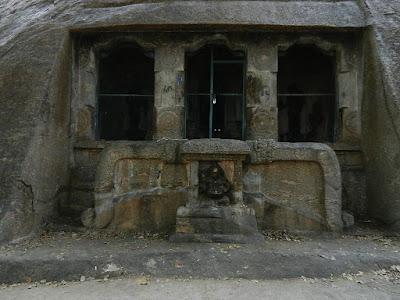
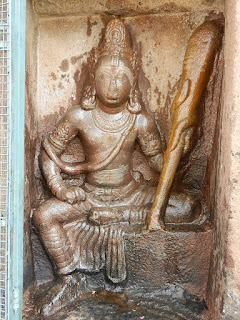
Aritappati also has a rock-cut Linga, from the mother rock, with a Candesa and Ganesha flanking it outside. In-situ lingas and a fondness for depicting Ganesha are the Pandya idiom.

In-situ Linga from mother rock
Aritapatti, Madurai

Candesha
Aritapatti, Madurai


Aritapatti cave temple, near Madurai

The pinnacle of early Pandyan art can be seen in Kalugumalai. Like Mamallapuram, it is incomplete. It a rare monolith, carved from top down, in two finished tiers, after excavating a portion from the slope of the hill, leaving space for the temple in the middle. Its remoteness ensures its anonymity.

It has a full complement of figures: dancing gaNas, directional deities, apsaras, gods and animals. The sculpture rivals mature Pallava art. The ganas jump and dance with exuberance. All profiles are done in excellent proportion, and the sculptors conspicuously demonstrate this mastery. Saying, “The Kalugumalai artists, could make their ganas leap out of their architectural rigidity and jump through space,” Nagaswamy exhibits his virtuosity in creating new English idiom too!

Mridanga Dakshinamurth, Kaluguamlai

Playful ganas, Kalugumalai

Subrahmanya, Kalugumalai

Vishnu, and gaNas, Kalugumalai

gaNas with ghatams

ganas blowing conches (shankha)

UmaMaheshvara, Kalugumalai


The supreme talent and creative diversity of the artist is reserved for the Supreme deities: Siva as UmaMaheshvara, with Parvati passionately turned towards him. “For one desirous of experiencing an overflowing aesthetic joy,” says SaHridaya Nagaswamy, the supreme elegance of Dakshinamurthy is the sculpture to be seen.

Jain tirthankaras, Kalugumalai

Ambika Yakshi, Kalugumalai


We also see artistic excellence of the large repertoire of Jain sculptures, especially in Ambika and the Parsva devatas : such depictions are not seen even in the Pallava region.

Sculptures of the Rajakkalmangalam temple also exhibit a uniquely Pandyan idiom and beauty. This temple no longer exists, but its sculptures are in Tirumalai Nayak Mahal museum in Madurai. With the conquest of Pandyas by the Cholas, the idiom of the latter then took over.

Rajakkamangalam Narasimha
Photo: Kallidai Ram

Rajakkamangalam Vishnu
Photo: Kallidai Ram

Conclusion

The remarkable diversity and depth of scholarship of Dr Nagaswamy is revealed in his papers presented in international fora, in universities, museums and in journals and other publications.

-----

Video Links

My lecture (in Tamil) on Cave temples of Pandyas

Badri Seshadri lecture (Tamil) on Vettuvan Kovil - Pandya monolith at Kalugumalai

Essay Links

This essay is the last of the series of summaries of papers presented in international seminars by Dr Nagaswamy. The summaries in this series were presented by me at a lecture titled Nagaswamy - Beyond Borders at Tamil Heritage Trusts' Pechu Kacheri 2014 at Tatvaloka, Chennai.

My blogs on history

My blogs on art